

An expert guide from a color-matching specialist with 28+ years in shade card manufacturing and color science.
Choosing the right shade card manufacturer is one of the smartest investments a brand, OEM, or paint dealer can make. A well-made fandeck or chip-mounted shade card isn’t just a sample; it’s a technical tool that protects your brand, speeds approvals, and reduces costly color disputes. Below, I share a practical, field-tested checklist that procurement teams, brand managers, and specifiers can use to select a manufacturer who consistently delivers precision and reliability.
1. Technical accuracy: measurement tools & ΔE tolerances
A manufacturer must use instrumented color measurement spectrophotometers and controlled light booths to set deposition targets and verify final chips. Ask for the lab workflow: how they measure Lab* values, which instrument models they use, and what ΔE tolerance they guarantee (typical acceptable ΔE for commercial shade cards is often ≤1.5–2.0, depending on application). Vendors who combine instrument data with trained visual evaluation deliver the most repeatable results.
2. Deposition, chip mounting & manufacturing process
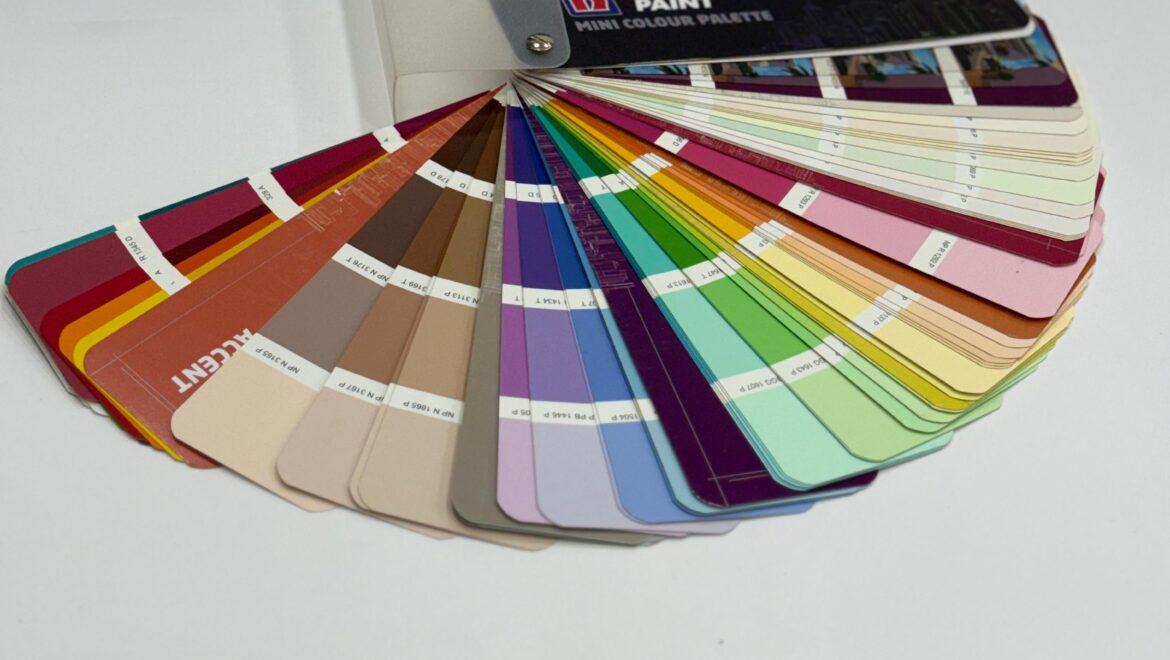
For chip-mounted shade cards, the deposition method (spray, draw-down, or industrial deposition) and mounting technique determine perceived color and durability. Inspect sample chips for smooth deposition, even film thickness, and secure mounting. Poor chip mounting creates edge shadows and mismatched readings, a common source of complaints from OEMs and coatings specifiers.
3. Materials & fade resistance
Durability matters. Ask about inks, pigments, and topcoats: UV-stable inks, UV-cure processes, and protective overcoats extend fandeck life. Manufacturers offering fade-resistant shade cards and abrasion-resistant finishes reduce replacement cycles for dealers and exhibitions.
4. Substrates, bindings & form factor options
Good manufacturers offer substrate choices (cardstock, PVC, PET) and binding options (ringed fan decks, glued blocks, mini fandeck kits). If you need portable fandeck kits for designers, check weight, pocketability, and sample protection. The right substrate ensures handling durability and accurate visual assessment.
5. Customization, branding & packaging
Custom shade cards are a branding touchpoint. Evaluate the vendor’s ability to print brand identities, custom color names, barcodes/NFC tags, and insert branded collateral. Packaging should be functional; sample kits with inserts, POS-ready sleeves, or dealer bundles increase adoption at retail.
6. Integration with digital systems
Top suppliers bridge physical and digital: QR or NFC tags on chips linking to formula data, batch records, or digital color systems, help specifiers and OEM procurement teams. This traceability is essential for large projects and reduces on-site testing time.
7. Quality control & certifications
Ask for QC protocols, sample audit reports, and traceability of production batches. ISO or industry-specific certifications indicate a mature quality system. Request records showing how they control inter-batch variance and how they handle color rejections.
8. Pilot runs, sample approval process & tolerances
A reputable manufacturer will conduct a pilot/sample run for approval before full production. The sample approval process should include instrument readings, visual checks under standard light booths, and a sign-off step. Confirm turnaround times for pilot approvals and production lead times.
9. Production capacity, lead times & MOQ
For B2B buyers, production capacity and minimum order quantities (MOQ) matter. Ensure the vendor can scale from small branded mini-fandecks for dealers to large OEM chips for automotive lines and can meet project deadlines without quality compromises.
10. Pricing, value & total cost of ownership
Price per unit is only part of the equation. Factor in replacement frequency (fade, wear), shipping, sample lead times, and the cost of color disputes avoided. A slightly higher unit cost can be justified by lower returns, faster approvals, and stronger brand representation.
11. Sustainability & materials sourcing
Sustainable materials and low-VOC topcoats are increasingly important for procurement with CSR mandates or green building projects. Ask about recyclable substrates, eco-friendly coatings, and any sustainability certifications.
12. After-sales support & technical collaboration
A true manufacturing partner provides technical support, formulation data, batch traceability, and on-call color experts who can support rollouts, exhibitions, and OEM audits. Look for vendors that offer training for dealer networks and POS materials.
Quick vendor checklist
- Provide spectrophotometer model & ΔE tolerance.
- Share sample pilot reports and visual audit photos.
- Confirm substrate, ink, and topcoat specs (fade resistance).
- Describe chip mounting and deposition methods.
- List packaging options and custom branding capabilities.
- Explain digital integrations (QR/NFC) and traceability.
- State lead times, MOQs, and scale capacity.
- Provide references from OEM or brand clients.
Final thoughts
Choosing a shade card manufacturer is a mix of technical validation and strategic fit. The right supplier brings precision color matching, durable materials, and the operational capacity to support brand launches, OEM contracts, and retail rollouts. When procurement teams prioritize measurement practices, deposition quality, and robust QA, they minimize risk and protect brand equity.
If you want a trusted partner who delivers instrument-verified fandecks, chip-mounted shade cards, and custom fandeck printing services, request a sample kit and technical spec today. Seeing a quality sample in hand is the best proof of capability.
Visit www.xtremecolors.co.in and get in touch.



0 comments
Write a comment